
How can forests be managed while also taking into account the various animals and plants that live there? Environmental consideration is a fundamental part of Swedish forestry, essential to ensuring that forests remain healthy and can continue to be managed and enjoyed by future generations.
In managed forests, environmental consideration can take many different forms. Old dead trees and branches – deadwood – are left to benefit insects, fungi and birds. Groups of different tree species are retained after harvesting or left as buffer zones near watercourses.
By creating different structures and increasing variation in managed forests, better conditions are created for a wide range of plants and animals to live and spread across the landscape. These environmental considerations are part of nature conservation efforts in forests. In this way, forests can continue to deliver multiple societal benefits at the same time – such as raw materials, climate benefits, biodiversity and opportunities for outdoor recreation – both today and for future generations.
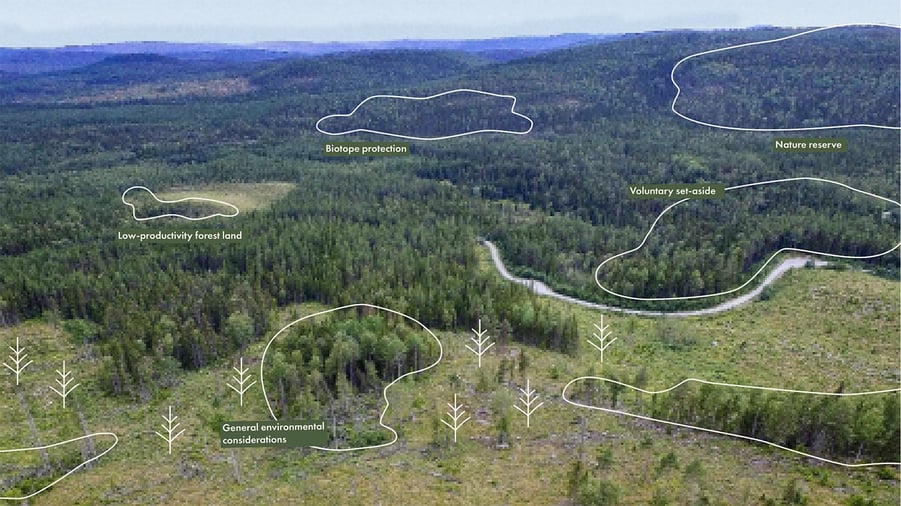
Many ways to support biodiversity
Nature reserves and voluntary set‑asides are some ways of excluding land from active management, but also during standard harvesting operations, trees, buffer zones and small stands are retained in modern even‑aged retention forestry. This means that future forests will be more diverse than today’s forests – with a wider range of tree species and more trees of different ages.
Photo: Ola Kåren
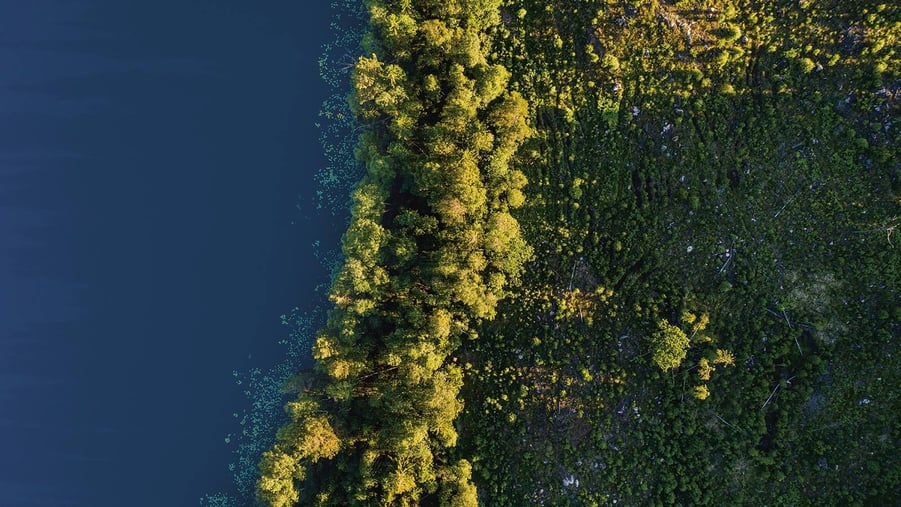
Buffer zones along watercourses
When you come across water in the forest, you will almost always see that the trees along the shoreline have been left standing. This is done to help protect the water quality of the stream or lake. The trees act as a natural filter, preventing sediment and silt from entering the water and causing turbidity.
Photo: Samuel Unéus
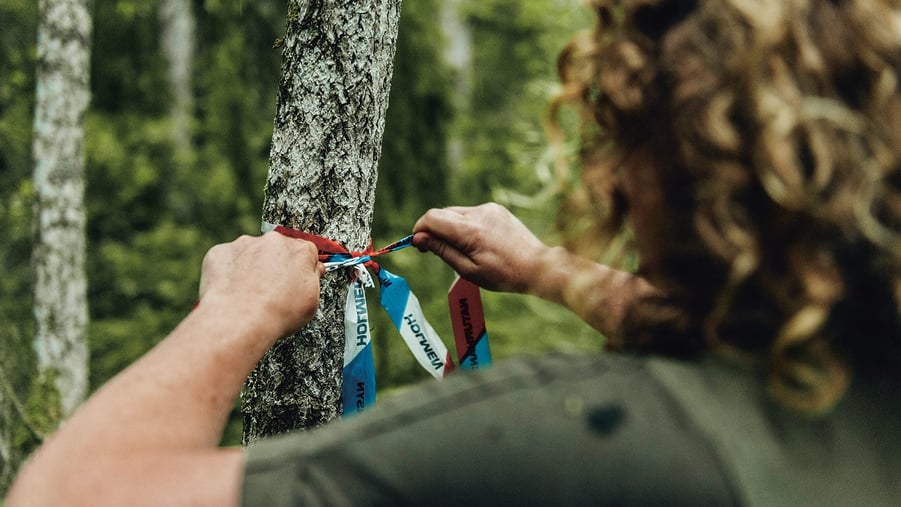
Marked trees
Marking tape is used to indicate nature conservation. When conservation areas are retained, these areas are marked with tape so that the harvester operator knows that trees inside the marked area must be left standing. This is indicated both in the forest and in the instructions displayed in the harvester’s onboard computer.
Marking tape is also used in other colours and with different wording to indicate, for example, cultural heritage sites, pre-commercial thinning operations, hunting or forest management measures. How the tape is attached can also be significant. Tape placed around a tree indicates that the tree must not be felled, while tape attached to a branch signals that this specific tree may be felled, but no others within the marked area.
Photo: Samuel Unéus
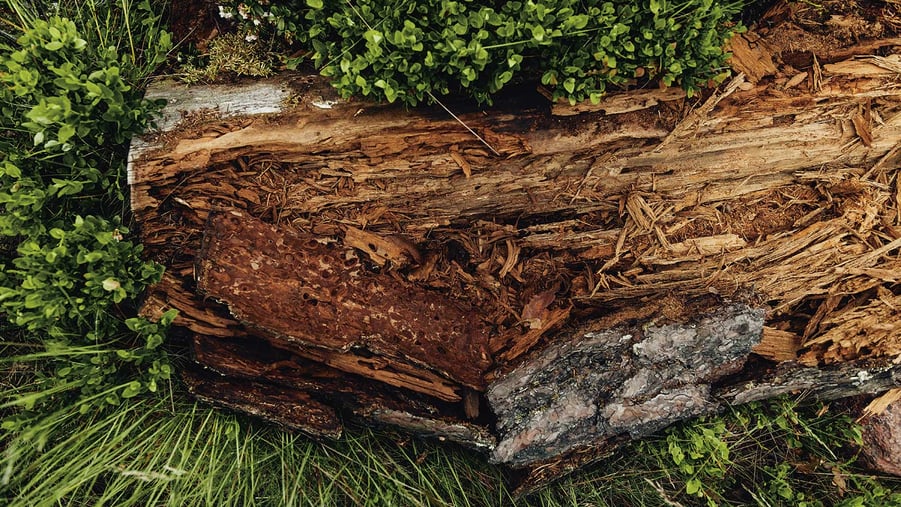
Dead wood
Do you think it looks untidy when trees or logs are left lying on the forest floor? Think again. Deadwood provides vital habitats for insects, lichens, mosses, bracket fungi and many other organisms. When there is a shortage of deadwood in the forest, forestry actively helps to create it. For example, an old wind‑thrown tree may be moved into a conservation area so it can be left to decay, stumps may be retained, or the harvester head may be used to scar certain tree trunks so that they slowly die. This approach has been used since the 1990s to improve conditions for wood‑dependent insects. The management planning ensures that deadwood in different forms is created: from different tree species, thick and thin parts of trees, in both shaded and sunny locations – all to benefit as many species as possible.
Photo: Samuel Unéus
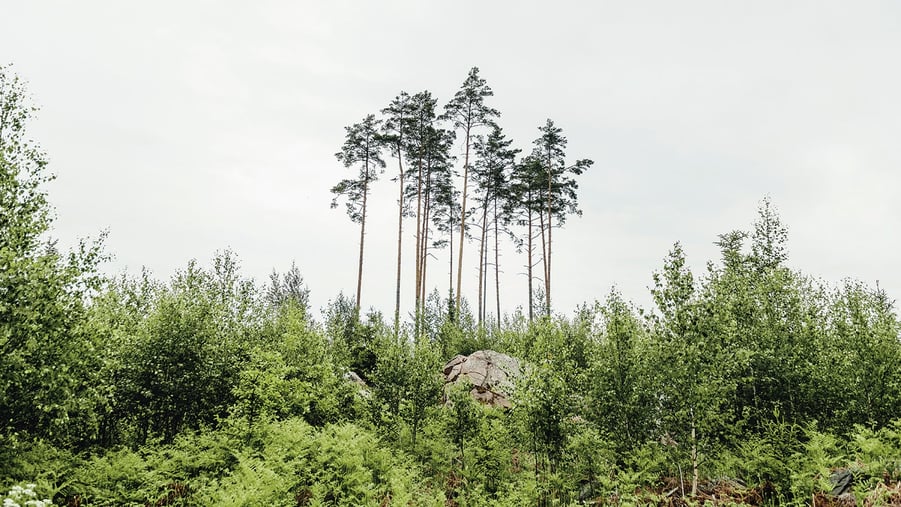
Tree retention cluster
Tree clusters are retained to reduce the sense of openness after harvesting. However, they are also left for environmental reasons, helping species to continue living in the area. In FSC‑certified forests, this approach is common – at least ten additional trees per hectare are left on the harvested area, and there are rules governing the maximum area that may be left treeless after harvesting.
Photo: Samuel Unéus
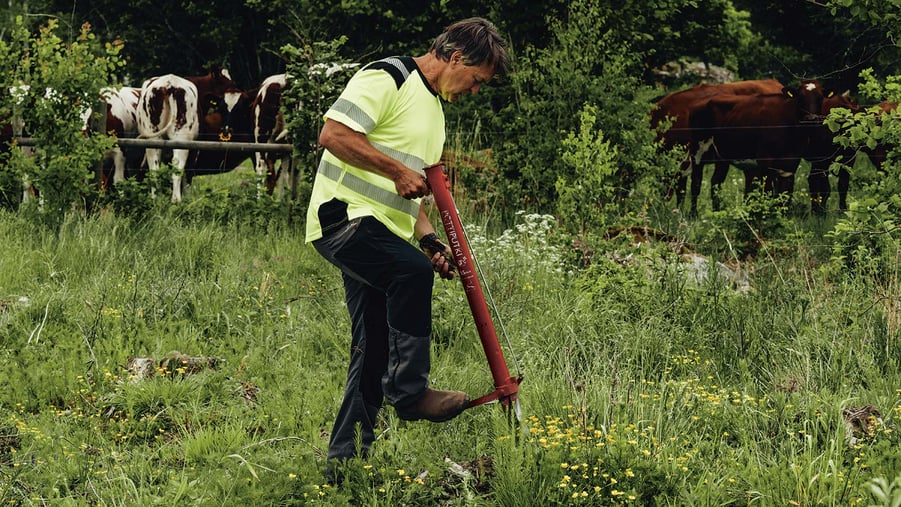
Planting
Every year, 400 million tree seedlings are planted by hand in Sweden. Attempts have been made to develop machines that can do the job, but so far they have not worked well enough. Seedlings are usually planted in spring, when there is plenty of moisture in the soil. Before planting, site preparation is carried out, loosening the soil and making it more nutrient‑rich. The seedling is planted high in a mound of mineral soil. This elevated position makes the seedling more resistant to frost, and mineral soil is disliked by the seedling’s main enemy – the pine weevil. Read more about how even‑aged retention forestry works.
Photo: Samuel Unéus
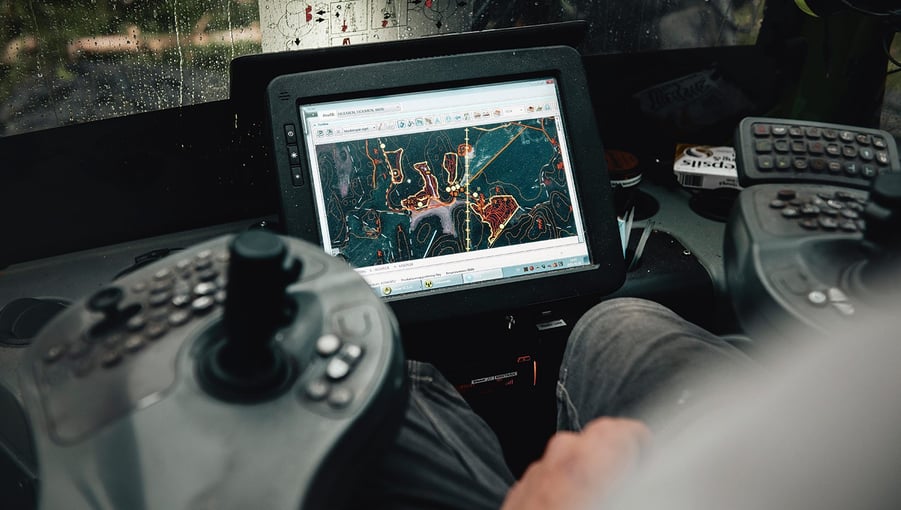
Inside the harvester
On the screen, the harvester operator sees a map of the area, known as a stand directive. Here, the person planning the harvest has entered information showing where the harvester should operate, including marked trails, trees to be avoided, cultural heritage sites and other relevant information. The harvest planner also marks machine trails, which allows the planner to later see whether any parts of the area were missed during harvesting.
Photo: Samuel Unéus
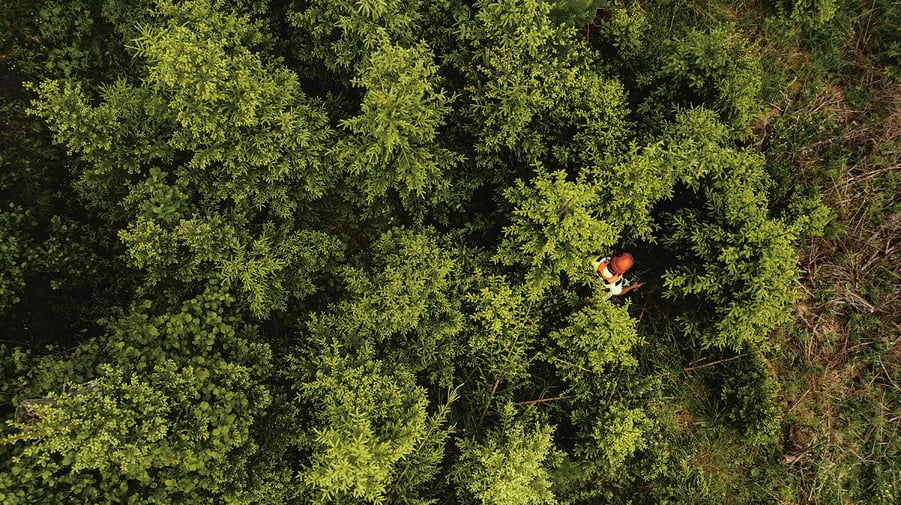
Pre-commercial thinning
A growing forest should not be too dense, which is why the person in the picture has squeezed in among the trees to carry out pre-commercial thinning. This is done for the first time when the seedlings are around 5 – 7 years old. During pre-commercial thinning, decisions are made about what the stand should look like in the future, and unwanted stems are removed, such as damaged trees, trees browsed by wildlife, and certain broadleaved trees. After 25 – 30 years, it is time for commercial thinning, and eventually final harvesting. By then, the trees will have grown for 60 – 100 years, depending on the tree species and where in the country the forest is located.
Photo: Samuel Unéus
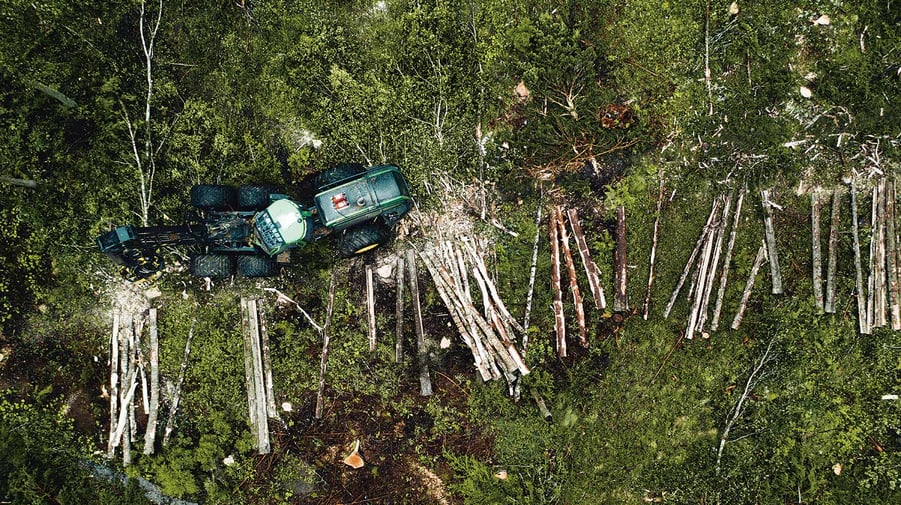
Log piles
In the forest, you may come across piles of sorted logs. This is because different parts of a tree, and different tree species, are used for different purposes. Large, healthy stems are sent to sawmills to be turned into sawn timber, while smaller-diameter parts goes to pulp mills to be made into products such as paper or packaging. Rotten wood, as well as tops and branches, is used for bioenergy. When the harvester has finished its work, a forwarder arrives a few days later to collect the sorted piles and place them in new stacks along the forest road while waiting for the timber truck. The truck first collects the timber destined for the sawmill to be turned into swan timber, as leaving them in the forest for too long can cause blue stain in the wood. Read more about how even‑aged retention forestry works.
Photo: Samuel Unéus
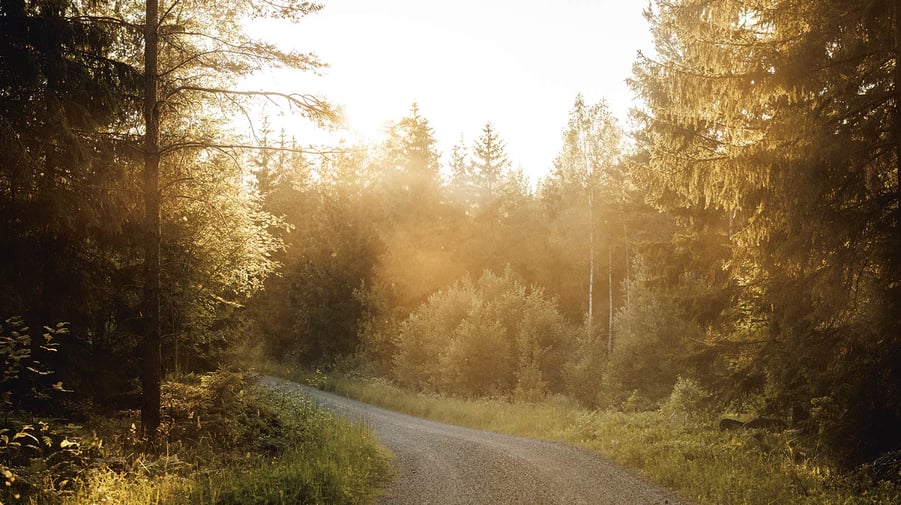
Forest roads
What could be better than heading into the forest to pick berries or mushrooms – or simply enjoying a refreshing walk with a stroller? For that, you can thank the forest owner. Without managed forests, it would be much harder to access the forest. In Sweden, there are 395,000 kilometres of forest roads, built by forest owners. Just remember to behave responsibly. Unfortunately, many forest roads have had to be closed because of reckless driving and littering.
Photo: Samuel Unéus
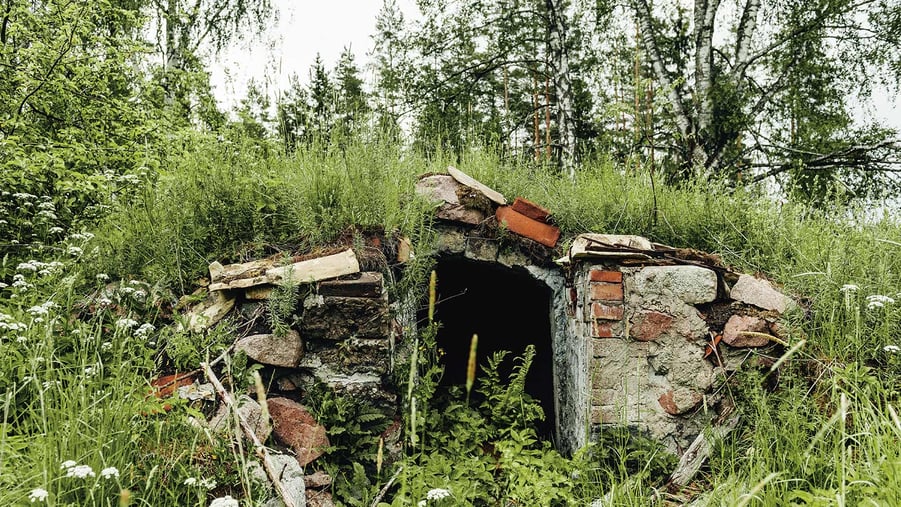
Cultural heritage remains
Here we see an old root cellar that is considered so old that the site must be protected. It is an example of a cultural heritage remain – in Sweden, we protect features such as old crofts and charcoal kiln sites. Very old remains, generally dating from before around 1850, are referred to as ancient monuments. These have even stronger protection under the Historic Environment Act (sv. kulturmiljölagen). Examples include ancient burial sites or stone settings. Around such settlement remains, so‑called “cultural stumps” are left. Within this area, planting and machine traffic are not permitted. The future stumps are marked in the field with tape labelled “cultural heritage”.
Photo: Samuel Unéus
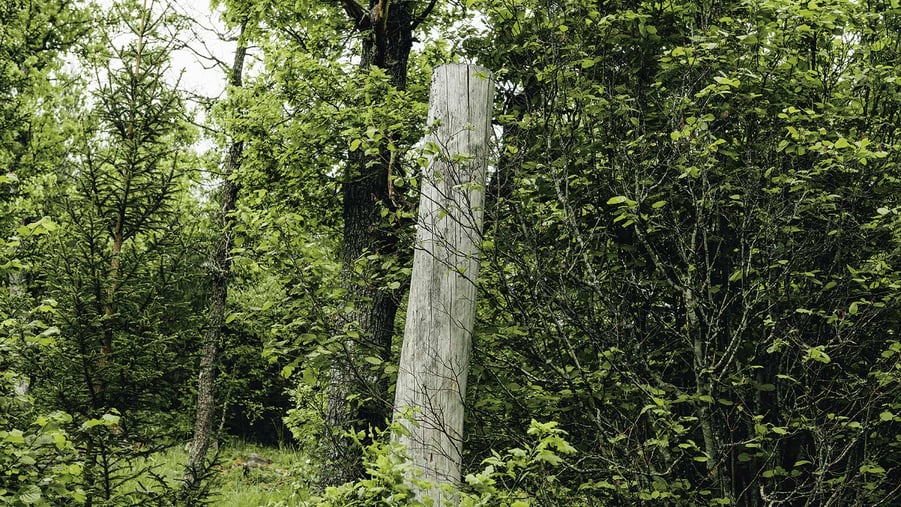
High stump
This is not a tree broken by the wind, but a three‑metre‑high stump deliberately left during forest harvesting. For around 15 years, it has provided habitat for insects, beetles and birds. High stumps are one way for forestry to increase the amount of deadwood in forests. You may also have passed a somewhat shorter stump, about 1.3 metres high, where a common buzzard or another bird likes to perch while watching for voles. This is a cultural stump, left by the forest owner around a cultural heritage site to protect the remain.
Photo: Samuel Unéus